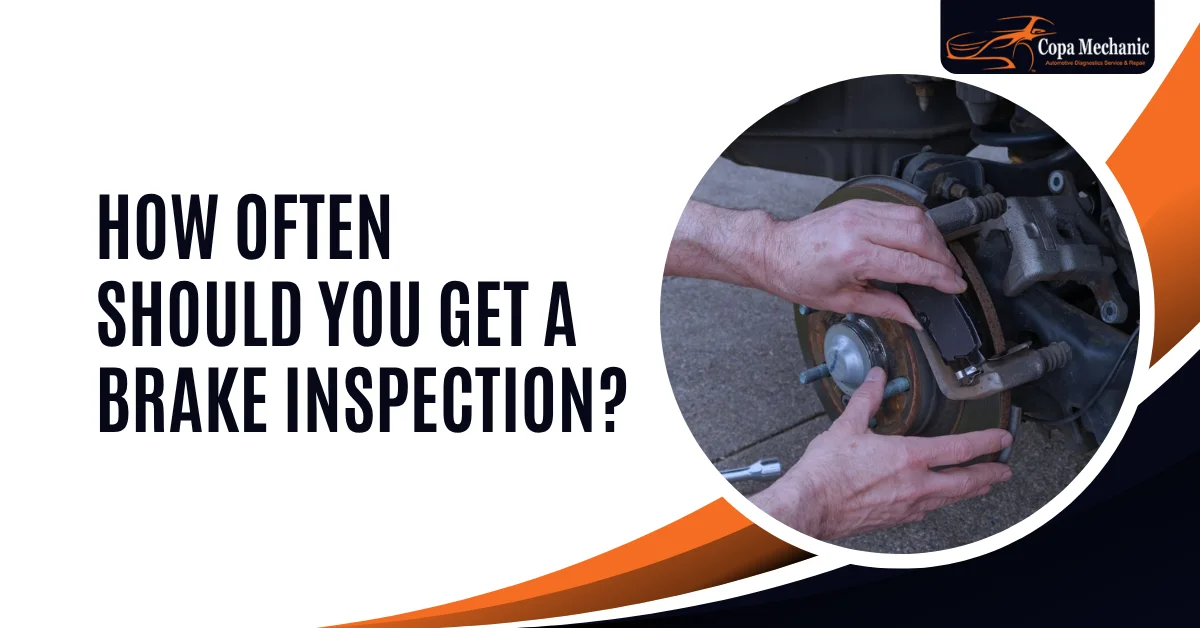
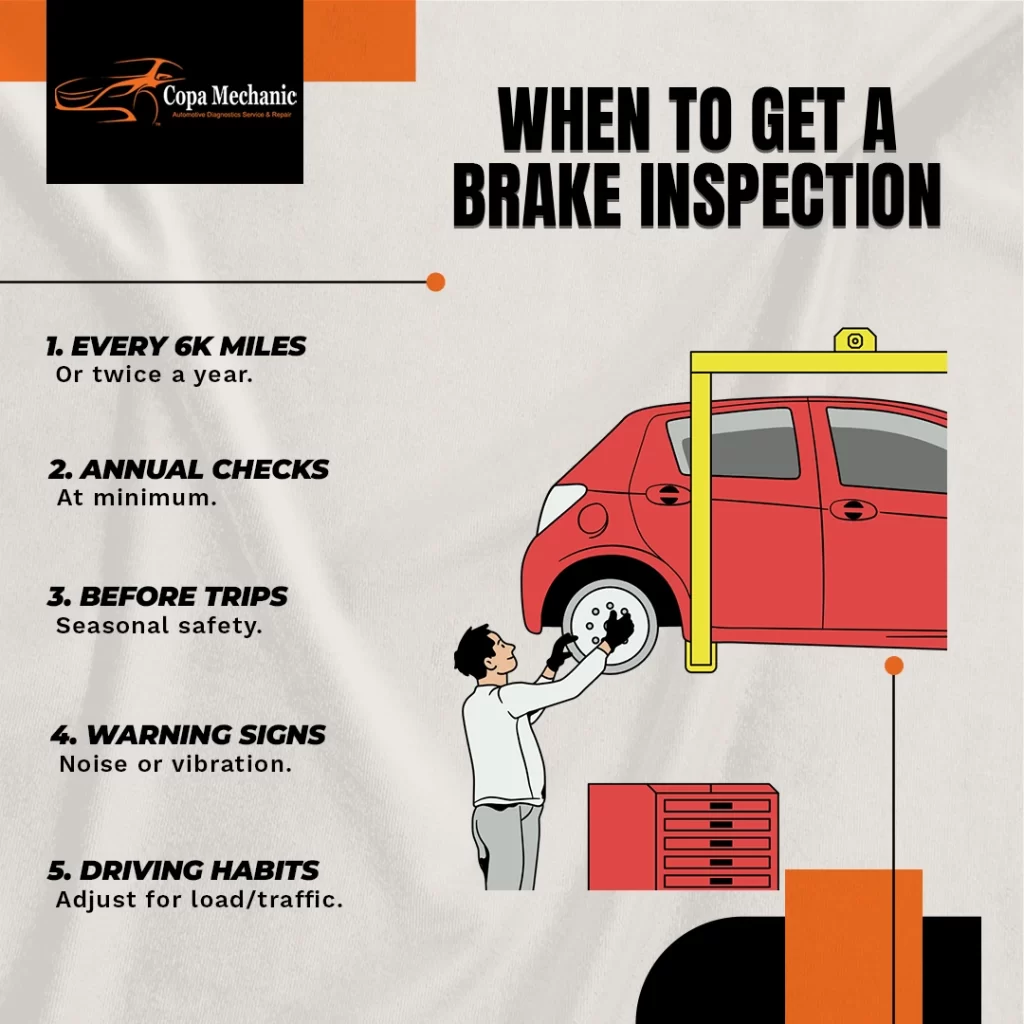
You should get a brake inspection every 6,000 miles or about twice a year. If you drive in heavy traffic, carry heavy loads, or hear squealing, grinding, or feel vibrations when braking, you should get them checked even sooner. Regular inspections catch problems early, keep your car safe, and save you money on bigger repairs later.
Key Takeaways
- Inspect brakes every 10,000 to 12,000 miles or annually, following manufacturer recommendations in the owner’s manual.
- Schedule inspections every 6 months or 6,000 miles for optimal brake maintenance.
- Perform seasonal checks, especially before long trips, to ensure brake reliability.
- Address any unusual noises or vibrations immediately with a brake inspection.
- Driving habits, terrain, and vehicle load can affect brake wear; adjust inspection frequency accordingly.
Why Brake Inspections Are Essential
Your brakes are essential for keeping you safe on the road, and regular inspections help guarantee they’re functioning properly. By catching wear and tear early, you can avoid costly repairs and dangerous situations. Staying proactive with brake maintenance is key to your vehicle’s safety and reliability.
The role of brakes in vehicle safety
While many aspects of vehicle maintenance are essential, brake inspections stand out as a significant component of guaranteeing safety on the road. Your brakes are critical for stopping effectively and avoiding accidents, which is why understanding the importance of regular brake checks can’t be overstated. Here are three key roles brakes play in vehicle safety:
- Stopping Power: Properly functioning brakes guarantee you can stop quickly when necessary, reducing the risk of collisions.
- Control: Good brakes help maintain vehicle control, especially during emergency situations or adverse weather conditions.
- Confidence: Knowing your brakes are in top shape gives you peace of mind while driving, allowing you to focus on the road ahead.
Prioritizing brake inspections can make all the difference in your safety and that of others on the road.
Catching wear and tear early
Regular brake inspections play an essential role in catching wear and tear before it turns into a more serious issue. By sticking to the recommended brake inspection schedule, you can identify problems early, preventing costly repairs and ensuring your safety on the road. Worn brake pads, fluid leaks, or damaged rotors can often go unnoticed until they lead to a breakdown or an accident. Scheduling inspections every six months or according to your vehicle’s manual helps you stay ahead of potential issues. Being proactive not only enhances your vehicle’s performance but also extends the lifespan of your braking system. Taking care of your brakes now can prevent problems and stress later on.
General Timeline for Brake Inspections
When it comes to brake inspections, following manufacturer recommendations is key to keeping your vehicle safe. Most experts suggest routine checks based on industry guidelines, which can vary depending on your driving habits and vehicle type. Staying on top of these timelines can prevent serious issues down the road.
Manufacturer recommendations
Understanding manufacturer recommendations for brake inspections can greatly enhance your vehicle’s safety and performance. Following these annual brake inspection guidelines will help guarantee your brakes function properly and prevent costly repairs down the line.
- Check the owner’s manual: Each vehicle has specific intervals for brake inspections based on its design and usage.
- Consider your driving habits: If you frequently drive in stop-and-go traffic or carry heavy loads, you might need inspections more often.
- Pay attention to warning signs: If you hear squeaking or grinding noises, or if the brake pedal feels soft, it’s time for an inspection, regardless of the schedule.
Industry guidelines for routine checks
While it’s important to adhere to manufacturer recommendations, industry guidelines also provide a solid framework for routine brake inspections. Generally, it’s advised to have your brakes checked every 10,000 to 12,000 miles or at least once a year. If you notice any unusual sounds, vibrations, or warning lights, don’t wait for the scheduled check—get them inspected immediately. Additionally, seasonal checks can be beneficial, especially before long trips. These brake system maintenance tips can help maintain your vehicle’s safety and performance. Remember, regular inspections not only prevent costly repairs down the line but also enhance your driving experience. By following these guidelines, you’ll keep your brakes in top condition and maintain your peace of mind on the road.
Warning Signs You Need a Brake Check Sooner
If you hear squealing or grinding noises when you brake, it’s time to get your brakes checked sooner rather than later. You might also notice vibrations or longer stopping distances, which can indicate serious issues. Don’t wait until it’s too late—addressing these warning signs can keep you safe on the road.
Squealing or grinding noises
Have you noticed any squealing or grinding noises when you apply your brakes? Those sounds aren’t just annoying; they’re warning signs that something may be wrong with your braking system. Ignoring them could lead to serious safety issues. Here are three reasons to pay attention to squeaking or grinding brake noises:
- Worn Brake Pads: The noise often indicates that your brake pads are worn down and need replacement.
- Brake Rotor Damage: Grinding sounds may suggest that your rotors are damaged and could require resurfacing or replacement.
- Moisture Buildup: Squeaking can also be caused by moisture or debris between the pads and rotors, which may need cleaning.
Don’t wait—schedule a brake inspection as soon as possible!
Vibration or longer stopping distances
Experiencing vibrations in your steering wheel or seat when braking can be just as concerning as those squealing or grinding noises. If you notice these vibrations when braking, it’s a clear sign that something’s not right with your brake system. This could indicate issues like warped rotors or uneven brake pads. Additionally, if you find that your stopping distances are longer than usual, it’s time to take action. Longer stopping distances may suggest your brakes aren’t functioning effectively, which can be dangerous. Don’t ignore these warning signs; they can lead to more severe problems if left unchecked. For your safety, schedule a brake inspection at Copa Mechanic to address any concerns and guarantee your vehicle stops reliably.
Factors That Affect Brake Wear
Your driving habits play a significant role in how quickly your brakes wear down. For instance, frequent hard braking or driving in heavy traffic can accelerate wear, while lighter driving can extend their lifespan. Additionally, the type of vehicle you drive and its load capacity can also impact brake performance and longevity.
Driving habits and conditions
While many drivers may not realize it, driving habits and road conditions play an essential role in the wear and tear of brake systems. Your approach to driving can greatly impact how often you should schedule a brake pad and rotor wear check. Here are three key factors to reflect on:
- Aggressive Driving: Frequent hard braking and rapid acceleration can increase brake wear.
- Stop-and-Go Traffic: Constantly stopping and starting puts extra strain on your brakes, leading to quicker deterioration.
- Terrain: Driving in hilly or mountainous areas requires more braking force, which can wear down your brake components faster.
Vehicle type and load capacity
When considering how often to inspect your brakes, the type of vehicle you drive and its load capacity can greatly influence wear rates. For instance, larger vehicles like trucks and SUVs tend to experience more brake wear, especially if you regularly haul heavy loads. This added strain means you might need a professional brake inspection service more frequently than someone driving a lighter passenger car. Additionally, if you often find yourself in stop-and-go traffic or mountainous terrain, your brakes will wear down quickly. It’s important to stay proactive with inspections tailored to your vehicle’s specifics—don’t wait for warning signs. Regular checks can guarantee your brakes remain effective and your driving experience stays safe.
Schedule Your Brake Inspection with Copa Mechanic
Scheduling a brake inspection is essential for ensuring your vehicle’s safety and performance. At Copa Mechanic, we specialize in providing thorough brake service near you, ensuring your brakes function at their best. Here’s why you shouldn’t wait:
- Safety First: Regular inspections help identify issues before they become dangerous.
- Cost-Effective: Catching problems early can save you from costly repairs down the line.
- Enhanced Longevity: Proper maintenance extends the life of your brake components.
Don’t put your safety at risk. Make an appointment with Copa Mechanic today, and let our experienced team take care of your brake needs. We’re committed to transparent, high-quality service, so you can drive with confidence knowing your vehicle is in good hands.
Frequently Asked Questions
Can I Perform a Brake Inspection Myself?
Yes, you can perform a brake inspection yourself. Just check for wear on pads, listen for unusual sounds, and look for fluid leaks. However, for thoroughness and safety, consider consulting a professional mechanic regularly.
How Much Does a Brake Inspection Cost?
A brake inspection typically costs between $20 and $100, depending on your location and the shop’s pricing. It’s worth investing in for your safety and peace of mind while driving.
What Tools Are Needed for a Brake Inspection?
For a brake inspection, you’ll need a jack, jack stands, a lug wrench, a brake tool for measuring pad thickness, and possibly a flashlight for better visibility. Having these tools guarantees a thorough assessment of your brakes.
Do Different Vehicles Require Different Inspection Frequencies?
Yes, different vehicles do require varying inspection frequencies. Factors like make, model, and driving conditions affect how often you should check your brakes. It’s best to consult your owner’s manual for specific recommendations.
Can Weather Affect My Brake Inspection Schedule?
Absolutely, weather can dramatically affect your brake inspection schedule. Rain, snow, or extreme heat can wear down brakes faster, so you should check them more frequently to guarantee your safety on the road.
Conclusion
Keeping your brakes in top shape is like having a safety net for your driving. Regular inspections not only protect you but also enhance your vehicle’s lifespan. Don’t wait for warning signs to pop up; schedule your brake check-ups based on your driving habits and conditions. By being proactive, you’re not only safeguarding yourself, but also providing your vehicle with the maintenance it needs. So, take control and make brake inspections a top priority.