

Electrical issues that can drain your battery include faulty lights, a bad alternator, loose or corroded connections, and damaged wiring. Even small things like a light that doesn’t turn off or an aftermarket gadget left plugged in can slowly kill your battery. If your lights flicker, your car struggles to start, or you hear weird noises, it is a sign that something electrical is draining power and needs to be fixed.
Key Takeaways
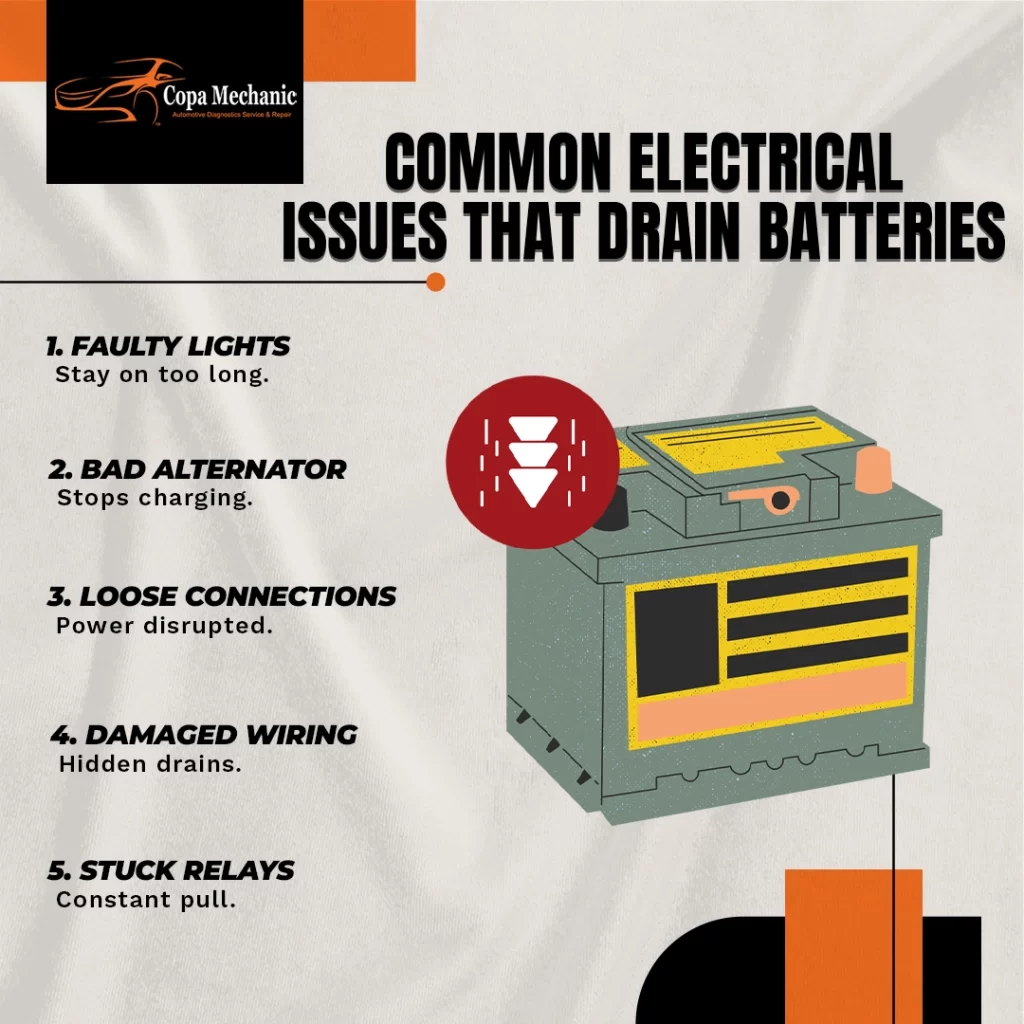
- Faulty interior lights or aftermarket accessories can lead to parasitic drains on the battery if not properly managed.
- A failing alternator may prevent the battery from receiving adequate charge, resulting in battery drainage.
- Corrosion around battery terminals and loose connections can disrupt power flow, causing unexpected battery drains.
- Faulty relays or control modules can continuously pull power, leading to excessive battery drainage.
- Regular diagnostics and maintenance of electrical components can help identify and prevent potential battery drainage issues.
Parasitic Drains from Electrical Accessories
Have you ever noticed your battery draining unexpectedly? Faulty interior lights or aftermarket accessories could be the culprits, silently drawing power when they shouldn’t. It’s important to identify and address these parasitic drains to keep your vehicle running smoothly.
Faulty interior lights or electronics
When interior lights or electronic accessories malfunction, they can silently drain your battery, leading to unexpected and inconvenient breakdowns. You might notice that your lights flicker or fail to turn off completely, which often signals a problem. If your battery’s constantly dying, it might be due to these faulty electronics. Be alert for faulty alternator symptoms as well, like dimming lights or unusual noises, which could complicate the issue. Regularly check that your interior lights turn off when you close the doors. If they don’t, it’s time to address the issue. Ignoring these signs can leave you stranded, so make sure to get your vehicle checked out to prevent battery drainage from these pesky electrical accessories.
Aftermarket accessories drawing extra power
Aftermarket accessories can greatly drain your vehicle’s battery if they aren’t properly installed or managed. Many drivers don’t realize that even small additions like LED lights, upgraded sound systems, or GPS units can contribute to a significant power drain from car electronics. If these accessories draw power when the engine is off, they can lead to a dead battery. To avoid this issue, make certain that all installations are done correctly and consider using a switch to cut power when not in use. Regularly check your battery’s health and the accessories’ power consumption. Being vigilant about your aftermarket accessories can save you from inconvenient battery failures down the road.
Failing Alternator or Charging System
Your car’s alternator plays an essential role in recharging your battery while you drive, but when it starts to fail, you might notice some warning signs. If you’re experiencing dimming lights or unusual noises, it’s time to pay attention. Ignoring these issues could leave you stranded with a dead battery.
How the alternator recharges your battery
Although many drivers rely on their car’s battery for power, it’s actually the alternator that plays an essential role in recharging it while the engine runs. The alternator converts mechanical energy from the engine into electrical energy, supplying power to the vehicle’s electrical systems and replenishing the battery. If your charging system isn’t functioning correctly, the battery may not receive the necessary charge, leading to a drained battery. Regularly testing your car battery and charging system can help identify potential issues before they become major problems. A well-functioning alternator guarantees your battery stays charged and supports all electrical components, enhancing your vehicle’s reliability. So, make certain to keep an eye on your car’s charging system to avoid unexpected breakdowns.
Warning signs of alternator trouble
How can you tell if your alternator is struggling? If you notice any of these warning signs of alternator trouble, it’s time to take action:
- Dim headlights: If your headlights flicker or seem weaker than usual, your alternator might not be providing enough power.
- Weak battery: A battery that frequently dies or struggles to start your car could indicate a failing charging system.
- Warning lights: Pay attention to your dashboard lights; a battery or alternator light could signal trouble.
- Unusual noises: Grinding or whining sounds from the engine may suggest issues with the alternator itself.
Addressing these symptoms early can save you from more significant problems down the road.
Bad Wiring or Loose Connections
When you’re troubleshooting battery issues, bad wiring or loose connections can often be the culprits. Corrosion around battery terminals can create resistance, while damaged wires might be draining your battery without you even realizing it. It’s essential to check these areas to guarantee your vehicle’s electrical system is functioning properly.
Corrosion around battery terminals
If you’re noticing electrical issues that seem to drain your battery, corrosion around the battery terminals might be the culprit. This build-up can disrupt the connection between your battery and the vehicle’s electrical system. Here are some common signs of corrosion:
- White or greenish powder around terminals.
- Difficulty starting your vehicle.
- Dim headlights or flickering dashboard lights.
- Unusual smells from the engine compartment.
Addressing corrosion quickly is crucial to prevent further electrical issues. Regularly inspect your battery terminals, clean any corrosion, and verify connections are tight. This can help you avoid common car battery drain causes and keep your vehicle running smoothly. Don’t let corrosion compromise your battery’s performance!
Damaged wires are creating hidden drains
While corrosion is a common issue, damaged wires can also create hidden drains on your battery. Over time, wires can wear down due to vibrations, heat, or exposure to moisture, leading to potential electrical shorts in car wiring. If you notice your battery draining unexpectedly, it might not just be a faulty battery; it could be that damaged wires are creating hidden drains that siphon power even when your vehicle is off. This can result in increased repair costs and inconvenience. To resolve this, it is crucial to have a professional inspect your wiring. Regular check-ups can help catch these issues early, ensuring your vehicle stays reliable and your battery remains charged when you need it most.
Faulty Relays, Switches, or Modules
If you’ve noticed your battery draining faster than usual, faulty relays or switches might be to blame. A stuck relay can continuously pull power, leaving your battery struggling to keep up. Additionally, control modules play an essential role in maintaining your battery’s health, so any issues there could also lead to problems.
When a stuck relay keeps pulling power
When a relay gets stuck, it can silently drain your battery, leaving you stranded and frustrated. This parasitic battery drain in vehicles often goes unnoticed until it’s too late. Here are some signs to watch for:
- Unresponsive Accessories: If your lights or radio won’t turn off, a stuck relay might be the issue.
- Unexpected Battery Drain: You notice your battery dying quicker than usual, even after a full charge.
- Inconsistent Electrical Behavior: Flickering lights or malfunctioning power windows can indicate a relay problem.
- Clicking Sounds: If you hear clicking sounds from the fuse box, it’s time to investigate.
Addressing these issues early can keep your vehicle running smoothly and avoid unexpected breakdowns.
The role of control modules in battery health
Control modules play an essential role in maintaining your vehicle’s battery health, as they regulate various electrical components and systems. If these modules malfunction, they can cause excessive battery drain, leading to premature battery failure. Faulty relays, switches, or modules might keep circuits open when they shouldn’t, drawing power even when your vehicle is off. This hidden drain can leave you stranded and frustrated. To avoid these issues, it’s important to have regular battery drain diagnostic services performed on your vehicle. By identifying and addressing any control module problems early, you can guarantee your battery stays healthy and your vehicle runs smoothly. Don’t overlook the significance of these components—they’re crucial for your battery’s longevity.
Get Expert Electrical Diagnostics at Copa Mechanic
Understanding the complexities of your vehicle’s electrical system can be challenging, especially when issues arise that drain your battery unexpectedly. At Copa Mechanic, we’re here to help with expert electrical diagnostics. If you’re searching for “auto electrical repair near me,” you’ve come to the right place! Our skilled team can identify and resolve any electrical problems that may be affecting your battery life.
Here are some signs you might need our help:
- Dimming headlights or interior lights
- Frequent jump-starts required
- Warning lights on the dashboard
- Electrical components malfunctioning
Don’t let battery issues disrupt your driving experience. Visit Copa Mechanic in Maricopa, AZ, for reliable service and peace of mind!
Frequently Asked Questions
How Can I Tell if My Battery Is Dead?
You can tell your battery’s dead if your car won’t start, the lights are dim, or you hear clicking sounds when turning the key. Try jump-starting it; if it doesn’t work, it likely needs replacement.
What Is the Lifespan of a Car Battery?
A car battery typically lasts three to five years, depending on usage and maintenance. You’ll want to check it regularly, keep connections clean, and make sure your vehicle’s charging system is in good shape for peak performance.
Can Extreme Temperatures Affect Battery Performance?
Yes, extreme temperatures can affect your battery performance. In cold weather, your battery’s capacity decreases, while heat can accelerate corrosion and damage. It’s important to monitor your battery’s health during temperature extremes to guarantee reliability.
How Often Should I Replace My Battery?
You should replace your battery every three to five years, but it’s like waiting for a magic moment—it can vary based on usage and conditions. Regular checks keep you ahead of unexpected failures.
What Should I Do if My Battery Keeps Dying?
If your battery keeps dying, check for loose connections or corrosion. Consider getting your charging system tested, guarantee all lights and accessories are off when parked, and think about replacing the battery if it’s old.
Conclusion
Your car battery isn’t always as dependable as you might think. Sometimes, it can drain quickly if certain electrical components, like your headlights, are left on even for a short period. This can lead to unexpected problems, such as difficulty starting your vehicle or being stranded. By paying attention to potential electrical issues and maintaining your battery, you can prevent inconvenient situations and keep your car functioning properly.