

Yes, it’s common for cars to overheat in Arizona because of the extreme summer heat. The hot weather puts extra stress on your car’s cooling system, especially if you’re stuck in traffic or driving on dusty desert roads. If you see your temperature gauge rising or notice steam under the hood, that means your car is too hot. To help prevent overheating, check your coolant regularly and keep up with basic maintenance.
Key Takeaways
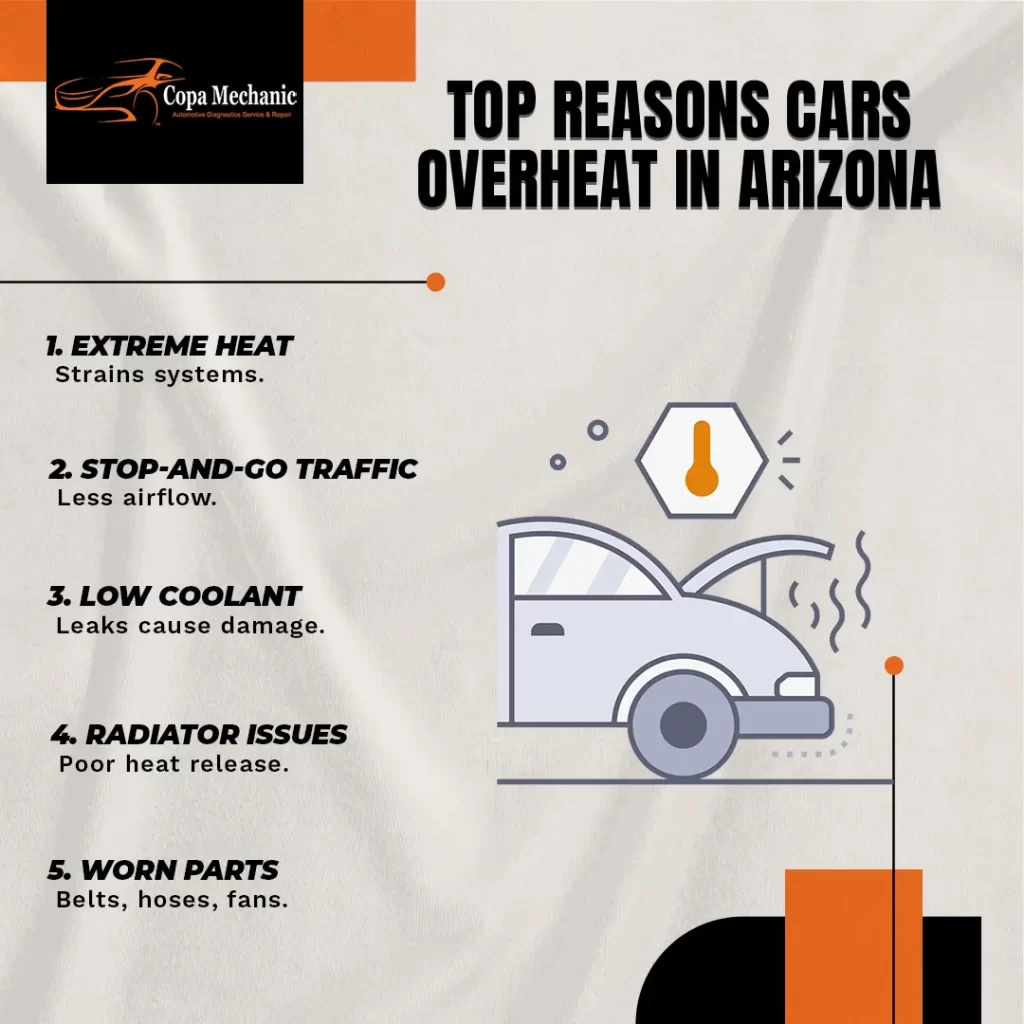
- Arizona’s extreme summer heat significantly increases the risk of car overheating due to higher strain on the cooling system.
- Stop-and-go traffic in urban areas exacerbates overheating risks, especially in hot weather.
- Dusty roads and uneven terrains can hinder cooling efficiency, making overheating more common.
- Low coolant levels, radiator issues, and faulty components are frequent causes of overheating in Arizona vehicles.
- In extreme heat conditions, regular maintenance such as coolant checks and inspections is essential to prevent overheating.
Why Arizona’s Climate Puts Cars at Risk of Overheating
Arizona’s extreme summer heat can really take a toll on your car, especially when you’re maneuvering those desert roads. The intense temperatures can put extra strain on your vehicle’s cooling system, particularly in stop-and-go traffic. If you’re not careful, this can lead to overheating and costly repairs.
Extreme summer temperatures and desert driving conditions
As temperatures soar during the summer months, the combination of extreme heat and challenging desert driving conditions can considerably increase the risk of your car overheating. When you’re traversing Arizona’s arid landscape, the relentless sun can push your engine temperature higher than usual. Hot weather puts extra strain on your vehicle’s cooling system, making it vital to guarantee everything’s in top shape. Dusty roads and uneven terrains can further complicate matters, leading to potential overheating. It’s essential to check your coolant levels regularly and keep an eye on your temperature gauge. Neglecting these factors could result in a car overheating in hot weather, leaving you stranded in the sweltering heat. Stay proactive to keep your vehicle running smoothly this summer.
The added strain on cooling systems in stop-and-go traffic
When maneuvering through the bustling streets of Arizona, you might not realize how stop-and-go traffic adds extra strain on your car’s cooling system. In these situations, your engine works harder, generating more heat while airflow through the radiator decreases. This can lead to overheating on Arizona highways, especially during the sweltering summer months. If you’re stuck in traffic, your vehicle’s coolant might not circulate effectively, causing the engine temperature to rise quickly. Regularly checking your cooling system and verifying your radiator is functioning properly can help mitigate this issue. Remember, keeping an eye on your temperature gauge is essential to avoid costly repairs and guarantee your vehicle runs smoothly, even in the most demanding conditions.
Common Causes of Overheating in Hot Weather
When it comes to overheating in hot weather, there are several common culprits you should be aware of. Low coolant levels or leaks can lead to serious engine trouble, while issues with your radiator, thermostat, or water pump can also cause problems. Don’t forget about worn belts, hoses, or cooling fans, as they can all contribute to your car’s overheating situation.
Low coolant levels or leaks in the system
One major reason cars overheat, especially in hot weather like Arizona’s, is low coolant levels or leaks in the cooling system. Coolant plays a vital role in regulating your engine’s temperature, and when it’s low, it can’t absorb heat effectively. If you notice your temperature gauge rising or see puddles of coolant under your car, you might have leaks in the system. Regularly checking your coolant levels can help you catch issues early. You should also inspect hoses and connections for signs of wear or damage. If you suspect low coolant levels or leaks in the system, it’s best to address them quickly to avoid more severe engine damage and keep your vehicle running smoothly.
Radiator, thermostat, or water pump issues
Overheating can often stem from issues with your radiator, thermostat, or water pump, particularly in the sweltering Arizona heat. If your radiator’s clogged or damaged, it can’t effectively dissipate heat, leading to overheating. A faulty thermostat might not open when it should, causing coolant flow issues and raising engine temperatures. Your water pump is vital for circulating coolant; if it’s malfunctioning, your engine can quickly overheat. In extreme heat, it’s important to perform a radiator check to guarantee everything’s functioning correctly. Ignoring these components can result in costly repairs and even engine damage. Regular maintenance and inspections can help you avoid overheating problems, keeping your vehicle running smoothly in Arizona’s harsh conditions.
Worn belts, hoses, or cooling fans
As temperatures soar in Arizona, worn belts, hoses, and cooling fans can become significant contributors to engine overheating. If your car’s belts are frayed or loose, they may not effectively drive the cooling system, leading to overheating. Hoses that are cracked or leaking can disrupt the coolant flow, further exacerbating the problem. Additionally, if your cooling fans aren’t working properly, the engine may not receive adequate airflow, causing it to run hot. It’s important to regularly inspect these components, especially during the scorching summer months. Taking preventive measures can save you from costly repairs and guarantee your vehicle runs smoothly. If you suspect any issues with worn belts, hoses, or cooling fans, don’t hesitate to get them checked out.
Warning Signs Your Car Is Overheating
If you notice your temperature gauge creeping up or a warning light on your dashboard, it’s time to pay attention. Steam or smoke billowing from under the hood is another clear sign something’s wrong. Additionally, strange smells, like burning or a sweet coolant odor, can indicate your car is overheating and needs immediate attention.
Rising temperature gauge or dashboard warning lights
How can you tell if your car is running too hot? One of the most obvious signs of engine overheating is a rising temperature gauge on your dashboard. If you notice the needle creeping toward the red zone, it’s time to pay attention. Additionally, keep an eye out for dashboard warning lights that signal potential overheating issues. These lights are your car’s way of communicating that something’s not right. Ignoring these signs can lead to serious engine damage, so it’s essential to act quickly. If you see the temperature gauge rise or a warning light illuminate, pull over safely and investigate the issue. Staying alert to these signs can help you avoid costly repairs down the road.
Steam or smoke from under the hood
One clear indicator that your car may be overheating is the presence of steam or smoke rising from under the hood. If you notice this alarming sight, it’s vital to pull over safely and turn off your engine immediately. Common causes of engine overheating include low coolant levels, a malfunctioning thermostat, or a faulty water pump. These issues can lead to significant engine damage if not addressed quickly. Additionally, a leak in the cooling system might also cause the engine to overheat, resulting in steam or smoke. Always stay vigilant for these signs, especially in Arizona’s intense heat, and don’t hesitate to seek professional help to diagnose and resolve the problem before it escalates.
Strange smells like burning or sweet coolant odor
When you catch a strange smell, like burning rubber or a sweet coolant odor, it’s a sign that your car might be overheating. Burning smells often indicate that parts are getting too hot or that there’s an issue with the engine components. A sweet coolant odor typically suggests a coolant leak, meaning your engine cooling system isn’t functioning properly. Ignoring these smells can lead to severe engine damage. To avoid this, stay on top of engine cooling system maintenance, checking hoses and coolant levels regularly. If you notice any strange smells, it’s vital to address them immediately. Don’t hesitate to consult a professional to guarantee your vehicle remains safe and efficient on the road.
Tips to Prevent Overheating in Arizona
To keep your car from overheating in Arizona’s intense heat, it’s essential to stay proactive. Regularly check your cooling system and fluids, park in shaded areas, and schedule seasonal maintenance. Taking these simple steps can help guarantee your vehicle runs smoothly even in the hottest months.
Regular cooling system inspections and fluid checks
Regular cooling system inspections and fluid checks are crucial, especially in the sweltering Arizona heat. Neglecting these can lead to serious overheating issues, putting your vehicle at risk. Make it a habit to inspect your coolant levels regularly, confirming they’re at the proper levels and free from contamination. Check for any leaks or damage in hoses, as even small issues can escalate quickly in the desert climate. Remember, your engine works harder in high temperatures, making these checks essential for preventing car overheating in desert heat. If you’re unsure about the inspection process, don’t hesitate to consult a professional. Keeping your cooling system in top shape will help guarantee a smoother, safer ride through Arizona’s intense summer months.
Parking in shaded areas and using sunshades
How can you keep your car from overheating in Arizona’s blazing sun? One effective method is parking in shaded areas whenever possible. Whether it’s a tree, a building, or a designated shade structure, keeping your car out of direct sunlight can help maintain a cooler interior and prevent engine overheating. Additionally, using sunshades on your windshield can further reduce heat buildup inside your vehicle. These simple steps are key to overheating prevention for Arizona drivers, especially during those scorching summer months. By taking a few minutes to find shade or use sunshades, you can protect your car’s engine and prolong its life. So next time you park, think about keeping it cool!
Scheduling seasonal maintenance before peak summer heat
As summer approaches and temperatures soar in Arizona, scheduling seasonal maintenance for your vehicle becomes vital to prevent overheating. Start by checking your coolant levels and confirming your radiator is functioning properly. An experienced mechanic can inspect hoses and belts for wear and tear, as these components can fail under high heat. Don’t forget to have your A/C system serviced; a well-functioning air conditioning system can help keep your engine cool. Additionally, verify your engine oil is fresh and at the correct level, as this is essential for peak performance. By scheduling seasonal maintenance before peak summer heat, you’ll not only extend your vehicle’s lifespan but also guarantee a safer and more reliable driving experience during the hottest months.
Stay Cool on the Road with Copa Mechanic
When it comes to keeping your car cool in Arizona’s heat, Copa Mechanic has you covered. Our expert team offers cooling system diagnostics and repairs tailored to your needs. Don’t wait until it’s too late—contact us today to schedule your inspection and keep overheating issues at bay!
Expert cooling system diagnostics and repairs
While driving in the sweltering Arizona heat, you might notice your car’s temperature gauge creeping up, signaling a potential cooling system issue. If this happens, it’s essential to act quickly. Low coolant levels can lead to overheating, causing serious damage to your engine. At Copa Mechanic, we specialize in expert cooling system diagnostics and repairs. Our experienced team will thoroughly inspect your vehicle, identify any leaks, and guarantee your coolant levels are ideal. We recognize the importance of a reliable cooling system, especially in Arizona’s extreme temperatures. With our commitment to high-quality service, you can trust us to keep your car running cool. Don’t let overheating ruin your drive; let us help you stay cool on the road.
Preventative maintenance tailored to Arizona drivers
To keep your car running smoothly in Arizona’s brutal heat, regular preventative maintenance is essential. This means staying proactive about your vehicle’s needs, especially in our scorching climate. Here are a few key tips tailored for Arizona drivers:
- Use the best coolant for Arizona heat to prevent overheating.
- Regularly check your radiator and hoses for wear and tear.
- Monitor your tire pressure; hot weather can increase it.
- Schedule routine inspections to catch issues early.
Contact Copa Mechanic today to schedule your inspection and avoid overheating issues
If you want to avoid overheating issues this summer, contacting Copa Mechanic is a smart move. Our team knows how crucial it is for your vehicle to be in top shape during the hot Arizona months. We specialize in preparing cars for summer driving by conducting thorough inspections that identify potential overheating risks. Whether it’s checking your coolant levels, inspecting the radiator, or ensuring your A/C is functioning properly, we’ve got you covered. With over 70 years of combined experience, our family-owned business is dedicated to providing honest, high-quality service. Don’t wait until it’s too late; schedule your inspection today and stay cool on the road with Copa Mechanic. Your vehicle will thank you!
Frequently Asked Questions
How Can I Tell if My Coolant Is Low?
You can tell if your coolant’s low by checking the reservoir tank. If it’s below the minimum line, it’s time to add more. Look for any leaks or signs of overheating while you’re at it.
Does the Age of My Car Affect Overheating Risks?
Yes, the age of your car can affect overheating risks. Older vehicles often have worn-out components, like hoses and radiators, which may struggle to maintain ideal coolant levels. Regular maintenance can help mitigate these issues.
Can Driving Habits Contribute to Overheating Issues?
It’s a well-known saying that you get what you give, and in the case of your car, your driving habits can indeed lead to overheating issues. Specifically, driving in stop-and-go traffic, accelerating aggressively, and failing to perform regular maintenance can put excessive strain on your engine, thereby increasing the risk of overheating.
What Should I Do if My Car Overheats?
If your car overheats, pull over safely, turn off the engine, and let it cool down. Check coolant levels and look for leaks. If problems persist, call a mechanic to avoid further damage.
Is It Safe to Drive an Overheating Car?
No, it isn’t safe to drive an overheating car. Continuing to drive can cause severe engine damage. Pull over, let it cool down, and check coolant levels before attempting to drive again. Your car’s health matters!
Conclusion
In Arizona’s sweltering heat, keeping your car cool isn’t just a luxury—it’s a necessity. By staying aware of the common causes of overheating and watching for warning signs, you can dodge a meltdown and keep your vehicle running smoothly. Remember, an ounce of prevention is worth a pound of cure, so follow the tips outlined here to beat the heat. With a little care, you can guarantee your car stays as cool as a cucumber on the road.