
If your car struggles to start or there’s just a single click when you turn the key, your starter might be failing. Dashboard lights dimming or flickering during attempts can also signal issues. If the engine cranks but doesn’t start, the ignition system might be at fault. Issues like difficulty turning the key or stalling while driving are also signs. Want to know more about diagnosing these problems?
Key Takeaways
- If the engine doesn’t crank or starts with a single click, the starter motor may be failing.
- Dashboard lights illuminate, but the engine remains silent, indicating potential ignition switch issues.
- Rapid clicking sounds often suggest a weak or dead battery affecting the starter.
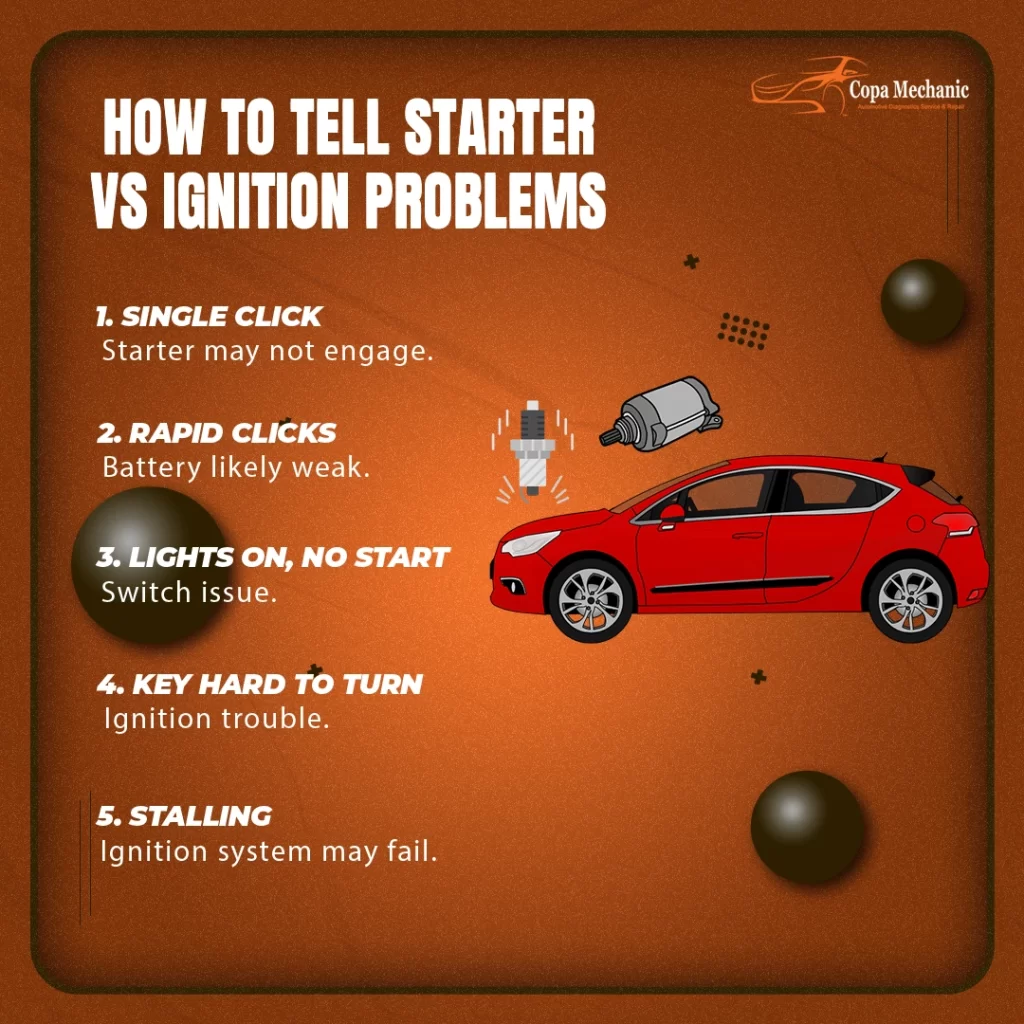
- Difficulty turning the key or stalling while driving can signal ignition system problems.
- Intermittent starting issues may arise from faulty starter relay, solenoid, or ignition switch components.
Common Symptoms of a Failing Starter Motor
When your car struggles to start, it could be a sign of a failing starter motor. You might hear a single click or a series of rapid clicks when turning the key, which indicates trouble. If the key turns but the engine doesn’t crank, it’s time to investigate further.
Single click vs. rapid clicking when starting
If you hear a single click or a series of rapid clicks when you try to start your vehicle, it’s a clear sign that something might be wrong with your starter motor or ignition system. A single click usually indicates that the starter motor isn’t engaging, which could be due to a faulty starter solenoid or electrical connection. In contrast, rapid clicking often suggests that your battery doesn’t have enough charge to power the starter, indicating a weak or dead battery. Both the single click vs rapid clicking when starting can point to underlying issues that need immediate attention. It’s essential to diagnose the problem early to avoid being stranded and to guarantee your vehicle runs smoothly.
The key turns, but the engine doesn’t crank
Hearing your key turn without the engine cranking can be frustrating and often points to a failing starter motor. When you notice that your key turns but the engine doesn’t crank, it’s essential to contemplate a few factors. First, check your battery; a weak or dead battery can prevent the engine from starting. Next, inspect the connections to the starter motor for corrosion or damage. Sometimes, a faulty ignition switch may also contribute to this issue. If these components seem fine and your key still turns but the engine doesn’t crank, it’s likely time to consult a professional. Ignoring these signs could lead to further complications, so don’t hesitate to reach out for help.
Signs Your Ignition Switch May Be Failing
If your car won’t start, but the dashboard lights come on, it might be a sign of a failing ignition switch. You could also experience intermittent no-start issues due to worn contacts within the switch. It’s essential to recognize these symptoms early to avoid being stranded.
The car won’t start, but the lights come on
When your car won’t start, but the lights come on, it could indicate a failing ignition switch. This situation typically means that the battery has power, but the electrical connection to the starter isn’t functioning properly. You may notice that the dashboard lights illuminate, and other electrical components work, but the engine remains silent when you turn the key. This inconsistency can be frustrating, as it suggests that some parts are operational while others are not. It’s essential to have your ignition switch inspected if you encounter this issue, as it’s a critical component in the starting process. Addressing this problem promptly can save you from more extensive repairs down the road.
Intermittent no-start issues caused by worn contacts
Intermittent no-start issues can often be traced back to worn contacts within the ignition switch. If you’re experiencing this problem, it’s essential to perform an intermittent no-start issue diagnosis. Here are some signs that your ignition switch may be failing:
- You notice a delay or hesitation when turning the key.
- The dashboard lights flicker or go dim when attempting to start.
- You hear a clicking sound, but the engine doesn’t turn over.
If you identify these symptoms, it might be time to have your ignition switch checked. Ignoring these signs can lead to more significant issues down the line, so addressing them promptly will help keep your vehicle running smoothly and reliably.
Problems with Starter Relay, Solenoid, or Push-Button Systems
If your car isn’t cranking, the issue might lie with the starter relay or solenoid. These components play an essential role in the starting process, and a malfunction can prevent your engine from firing up. Additionally, if you’ve got a push-button start system, problems here can also leave you stranded.
How a faulty relay or solenoid prevents cranking
A faulty starter relay or solenoid can greatly hinder your vehicle’s ability to crank. When these components malfunction, they can disrupt the electrical flow necessary to start your engine. Here are a few signs you might experience with starter relay and solenoid problems:
- No response: You turn the key, and nothing happens.
- Clicking sound: You hear a clicking noise, but the engine doesn’t start.
- Intermittent starting: Sometimes it starts, other times it doesn’t.
If you’re facing any of these issues, it may indicate that your starter relay or solenoid needs inspection or replacement. Addressing these problems quickly can save you from being stranded and guarantee your vehicle remains reliable.
Push-button start problems in modern vehicles
While push-button start systems offer convenience, they can also introduce unique challenges that may leave you stranded. Push-button start problems in modern cars often stem from issues with the starter relay or solenoid. If your vehicle doesn’t respond when you press the button, it could indicate a faulty relay that isn’t sending power to the starter. Similarly, a malfunctioning solenoid may fail to engage the starter motor, preventing your engine from cranking. You might also experience intermittent starting issues, which can be frustrating. If you suspect a problem, it’s best to consult a professional to diagnose and resolve the issue, ensuring your vehicle remains reliable and gets you where you need to go without hassle.
When Your Car Needs a Professional Diagnosis
If you’re experiencing persistent issues with your starter or ignition, it might be time to seek professional help. At Copa Mechanic, we believe in an electrical testing approach that prioritizes accuracy over guesswork. If your car won’t start or shows other symptoms, don’t hesitate to tow it to our shop in Maricopa for a thorough diagnosis.
“We don’t guess, we test” electrical testing approach
When your car shows signs of ignition or starter issues, it’s essential to seek professional diagnosis rather than relying on assumptions. At Copa Mechanic, we follow a “we don’t guess, we test” approach for accurate electrical testing. Our expert team utilizes specialized tools to pinpoint the exact problem, ensuring you get reliable solutions.
Here’s what you can expect from our professional starter and ignition diagnostics:
- Extensive electrical testing to identify faults
- Thorough inspections of wiring and connections
- Detailed explanations of findings and recommended repairs
When to tow your car to a shop in Maricopa
Wondering when it’s time to tow your car to a shop in Maricopa? If your vehicle won’t start after multiple attempts and you’ve ruled out a dead battery, it’s likely time for professional help. Unusual noises when turning the ignition, flickering dashboard lights, or a burning smell can indicate serious issues with your starter or ignition system. If your car is stalling frequently or showing warning lights, don’t risk driving it further. Towing it to a qualified shop guarantees that trained professionals can diagnose the problem accurately. Remember, it’s always better to be safe than sorry when it comes to your vehicle’s health. Trust the experts at Copa Mechanic for reliable service in Maricopa.
Get Reliable Starter & Ignition Diagnostics at Copa Mechanic
How can you guarantee your vehicle’s starter and ignition systems are functioning properly? At Copa Mechanic, we offer reliable diagnostics to pinpoint any issues. With our expertise, you won’t have to worry about guesswork.
Here’s what you can expect from our service:
- Thorough testing of your starter and ignition systems
- Honest assessments with no hidden fees
- Professional recommendations for any necessary repairs or starter replacement service in Maricopa, AZ
We’re committed to keeping your vehicle running smoothly. Our family-owned business believes in providing high-quality service that guarantees your peace of mind. When you choose Copa Mechanic, you’re choosing experience and integrity to keep you safe on the road. Don’t wait—get your diagnostics today!
Frequently Asked Questions
How Long Does a Starter Usually Last Before Needing Replacement?
Typically, a starter lasts about 100,000 miles, but factors like driving conditions and maintenance can affect its lifespan. If you notice issues, it’s wise to get it checked sooner rather than later.
Can a Weak Battery Mimic Starter or Ignition Issues?
Isn’t it funny how a weak battery can impersonate a starter or ignition problem? If your vehicle struggles to start, it might just be a battery issue. Always check the simplest solution first!
What Tools Are Needed to Test a Starter Motor?
To test a starter motor, you’ll need a multimeter, jumper cables, and possibly a socket set. These tools help you check voltage, connections, and guarantee the starter’s functioning properly without unnecessary guesswork.
Is It Safe to Jump-Start a Car With Ignition Problems?
Jump-starting a car with ignition problems is like playing with fire; it can be risky. If the ignition’s faulty, you might create more issues. It’s best to diagnose the problem before attempting to jump-start.
How Much Does It Typically Cost to Replace a Starter?
Typically, replacing a starter costs between $300 and $600, depending on your vehicle and labor rates. It’s best to get a quote from a trusted mechanic to guarantee you’re getting a fair price.
Conclusion
Just like a ship needs a sturdy anchor to stay steady in turbulent waters, your vehicle relies on a well-functioning starter and ignition system to keep you on course. If you notice those warning signs, don’t let the storm of confusion take over. Instead, chart a course for professional help and guarantee your car sails smoothly once again. With the right diagnostics, you’ll be back on the road, steering through life’s adventures without a hitch.