

If your vehicle starts acting strange electrically, the alternator should be on the list of possible causes. A failing alternator can affect everything from headlights and battery charging to starting power and engine reliability. In a place like Maricopa, where heat puts extra stress on batteries and charging systems, those issues can show up fast. At Copa Mechanic, alternator and charging system diagnosis is one of the most important services we provide because many no-start and electrical complaints trace back to this exact problem.
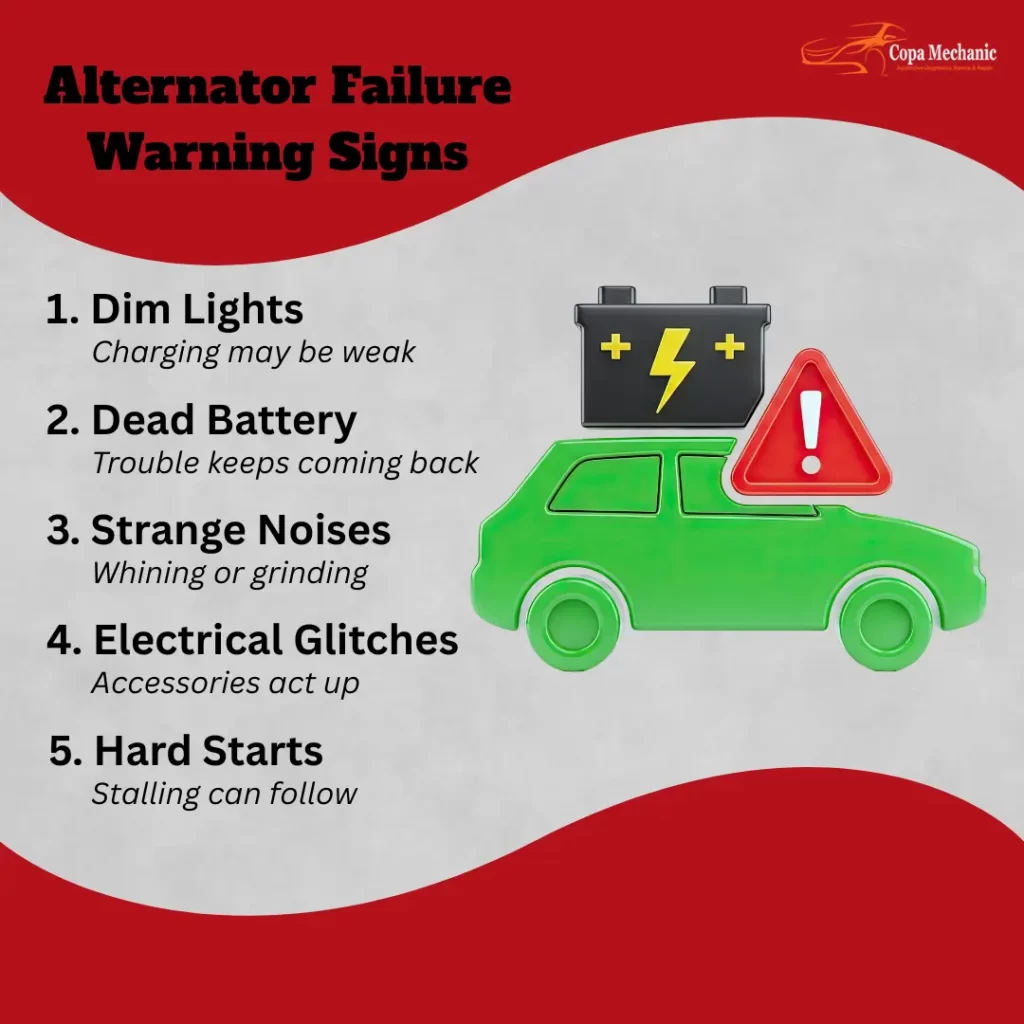
Dim or Flickering Lights
Lighting problems are often one of the earliest clues that the charging system is no longer keeping up. When voltage becomes unstable, the lights usually show it before anything else does.
Why weak charging causes headlights and dash lights to fade
Your alternator helps power the vehicle’s electrical system while the engine is running. When it begins to weaken, headlights may look dimmer than usual, dash lights may fade, or interior lights may pulse slightly at idle. These changes are easy to dismiss at first. But when the car’s lighting starts changing with engine speed or electrical load, that often points to a charging issue rather than a simple bulb problem.
How lighting problems can point to a failing alternator
Flickering or weak lights do not always indicate the alternator is bad, but they are one of the most common warning signs. They become even more suspicious when they show up along with other electrical issues like weak starting, battery trouble, or power accessories acting unpredictably.
Battery Problems That Keep Coming Back
A dead battery does not always mean the battery itself is the real problem. Sometimes, the battery is only showing the result of a charging system that is no longer doing its job.
When a dead battery is really an alternator issue
If the battery keeps dying even after it has been charged or replaced, the alternator may not be recharging it correctly while you drive. This is one of the most common ways alternator failure gets misdiagnosed. A vehicle may start fine with a jump, then go dead again later because the battery never actually recovered its charge on the road. That pattern usually deserves more than a battery swap.
Why repeated jump-starts should not be ignored
A jump-start should feel like an occasional fix, not part of your routine. If you are reaching for jumper cables more than once, there is a strong chance the battery, alternator, or another charging-system component needs proper testing. Around Maricopa, that matters even more in the summer. Heat is already tough on batteries, so a weak alternator can push the system over the edge faster than drivers expect.
Strange Noises Under the Hood
Not every alternator problem is electrical at first. Sometimes the first clue is mechanical.
Grinding or whining sounds that may come from the alternator
A failing alternator can make a whining, growling, or grinding noise. That sound may come from internal bearings, pulley issues, or other wear inside the alternator assembly. The sound is not always loud. In some cases, it starts as a subtle noise that changes with engine speed and becomes more obvious over time.
How worn bearings and pulleys affect charging performance
When bearings or pulleys wear down, they do more than create noise. They can also affect how the alternator spins and how consistently it charges. That is why strange under-hood sounds should not be brushed off as “just a belt noise” without checking further. A worn charging component can become both a mechanical and electrical problem if it is left alone.
Electrical Accessories Start Acting Up
Modern vehicles depend on stable voltage. When the alternator starts failing, smaller electrical glitches often show up before a total no-start happens.
Warning signs your alternator is failing through power window, radio, or A/C issues
Power windows may move more slowly than normal. The radio may cut out. The A/C blower may act weak or inconsistent. You may also notice dash warnings, accessory lag, or electronics that seem to work one moment and struggle the next. These issues are frustrating because they can feel unrelated. But when several of them start happening close together, unstable charging becomes a real possibility.
How unstable voltage affects modern vehicle electronics
Today’s vehicles rely on a steady electrical supply for comfort systems, sensors, controls, and communication between modules. When voltage starts dropping or fluctuating, the electronics can behave unpredictably. At Copa Mechanic, this is one reason we approach charging complaints with full testing instead of guessing. When a car has multiple electrical symptoms at once, the alternator may be the center of the story even if the first symptom looked small.
Trouble Starting or Sudden Stalling
A bad alternator can eventually affect the engine’s ability to start and keep running. That is the point where the problem shifts from inconvenient to urgent.
How a failing alternator can cause hard starts or no-start conditions
If the alternator is not charging the battery sufficiently, the battery may not have enough reserve power for the next start. That can lead to slow cranking, hard starts, or a complete no-start condition. This is one reason alternator issues are often confused with battery problems. The car refuses to start, so the battery gets blamed first, even though the charging system may have caused the battery to go flat in the first place.
Why engine stalling may signal a charging system problem
If the alternator fails badly, the vehicle may stall while driving because the electrical system can no longer support normal engine operation. That is one of the clearest signs the problem needs immediate attention. If your vehicle stalls, loses power, or feels unstable while driving, it is time to stop treating it like a minor issue.
When to Schedule Alternator Repair in Maricopa, AZ
Alternator problems rarely improve on their own. Once the warning signs begin, the smartest move is usually to test the system before you end up stuck in a parking lot or stranded on the side of the road.
Symptoms of a bad alternator that need prompt diagnosis
You should schedule alternator service promptly if you notice dim or flickering lights, repeated dead batteries, electrical glitches, unusual under-hood noises, slow starts, or stalling. These are some of the most common symptoms of a bad alternator, and they often overlap with battery or starter complaints. The important part is not diagnosing everything by symptom alone. These systems work together, so proper testing is what separates a correct repair from a guess.
Why early testing helps avoid bigger electrical repairs
Early testing can help prevent a chain reaction of problems. A weak alternator can overwork the battery, stress electrical components, and leave the vehicle unreliable when you need it most. That is especially true in Maricopa, where daily heat, local errands, and short-trip driving can hide charging weakness until the system finally gives up.
Schedule Alternator Repair at Copa Mechanic in Maricopa, AZ
If your car is showing warning signs that your alternator is failing, we are here to help you get a real answer before the problem gets worse. We provide alternator repair, electrical diagnosis, battery and charging system testing, and general auto repair for drivers throughout Maricopa. You can find Copa Mechanic at 22111 N White Rd, Maricopa, AZ 85139 and call (480) 285-8505 to schedule service. Current posted hours are Monday through Friday, 8:00 AM to 5:00 PM.
Frequently Asked Questions
What are the first signs of a bad alternator?
The earliest signs are often dim or flickering lights, electrical accessories acting oddly, or a battery that keeps losing charge. These symptoms can start small, which is why many drivers do not connect them to the alternator right away.
Can a bad alternator look like a bad battery?
Yes, very easily. A failing alternator often causes the battery to go weak or dead, so many drivers replace the battery first before realizing the charging system is the real issue.
Will a jump-start fix an alternator problem?
Not for long. A jump-start may get the engine running temporarily, but if the alternator is not charging properly, the battery will usually lose power again.
Can a bad alternator cause the engine to stall?
Yes. If the alternator stops supplying enough electrical power, the engine may stall because the vehicle cannot support normal operation. That is one of the more serious signs of charging system failure.
When should I schedule alternator repair?
You should schedule it as soon as you notice repeated battery trouble, dim lights, electrical glitches, strange noises, or hard starting. Catching the issue usually helps you avoid bigger electrical repairs and a sudden no-start situation.
Takeaways
Alternator trouble usually announces itself before complete failure. Dim lights, repeated battery problems, unusual noises, electrical glitches, and starting or stalling issues are all signs worth taking seriously. The earlier you test the charging system, the better chance you have of avoiding a breakdown and keeping the repair smaller. For Maricopa drivers, that kind of timing matters even more when Arizona heat is already pushing the electrical system hard.